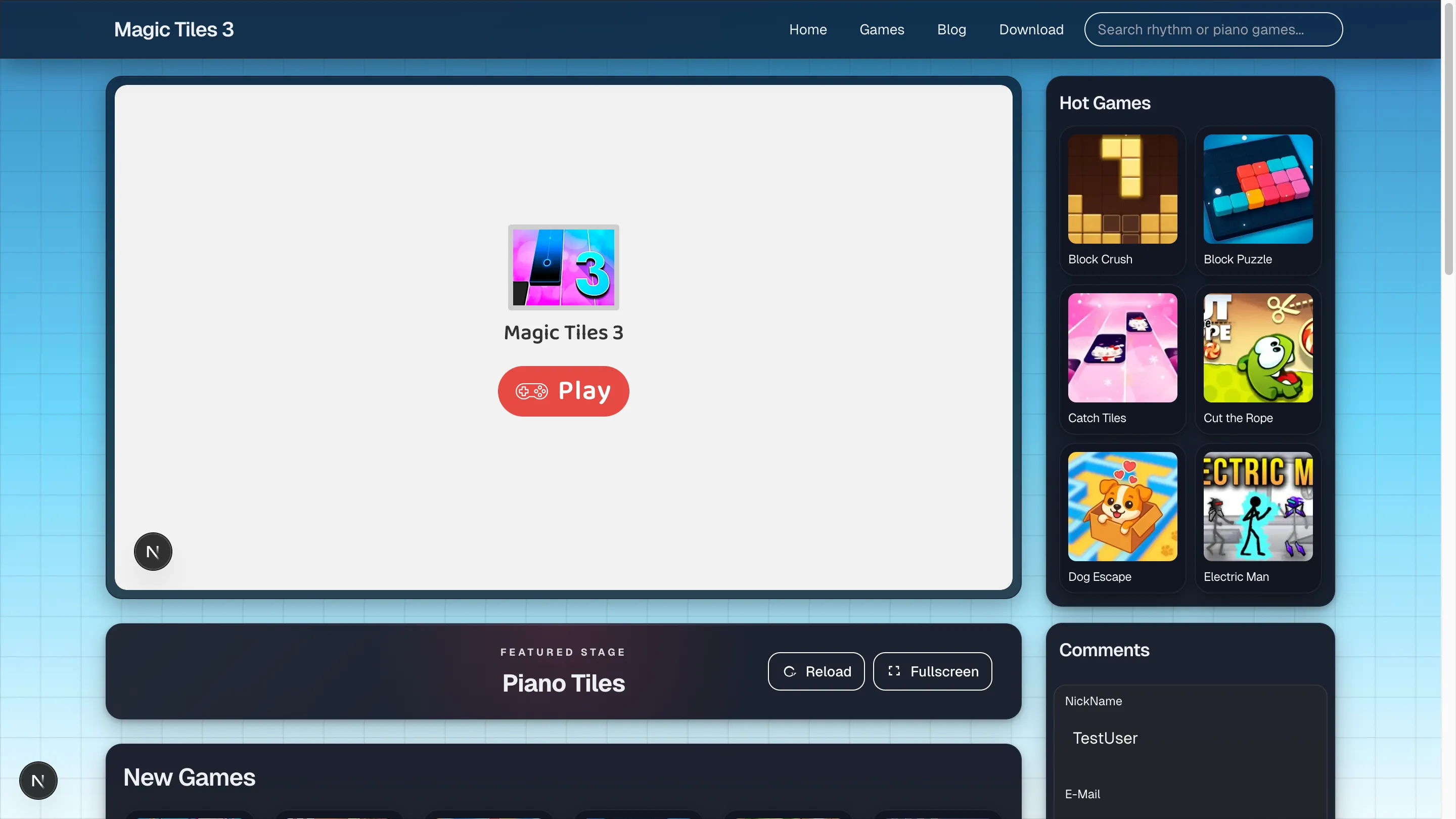
If you want to learn Piano Tiles here, the fastest route is to think in board states, not in hype. When I checked the browser flow on August 22, 2025, I started with the current site page, then used a clean classic browser board to rehearse the actual rule set: black tiles only, white space never, one miss and the round ends.
That combination made the lesson much clearer. The site page is useful for discovery, but the classic board is what taught me how the rhythm really feels under my fingers.
Piano Tiles: the core rule set
- Tap only the black tiles.
- Never tap the white tiles.
- Stay low with your eyes.
- Let rhythm set the pace instead of trying to outrun it.
That is enough to start. Everything else is refinement.
What a beginner should do in the first minute
- keep one finger or two fingers relaxed
- ignore score for the first few attempts
- watch the landing area, not the top of the lane
- treat the first miss as feedback, not failure
In my own browser checks, the board felt manageable as soon as I stopped chasing speed and started following the next tile only.
What changed after a few short attempts
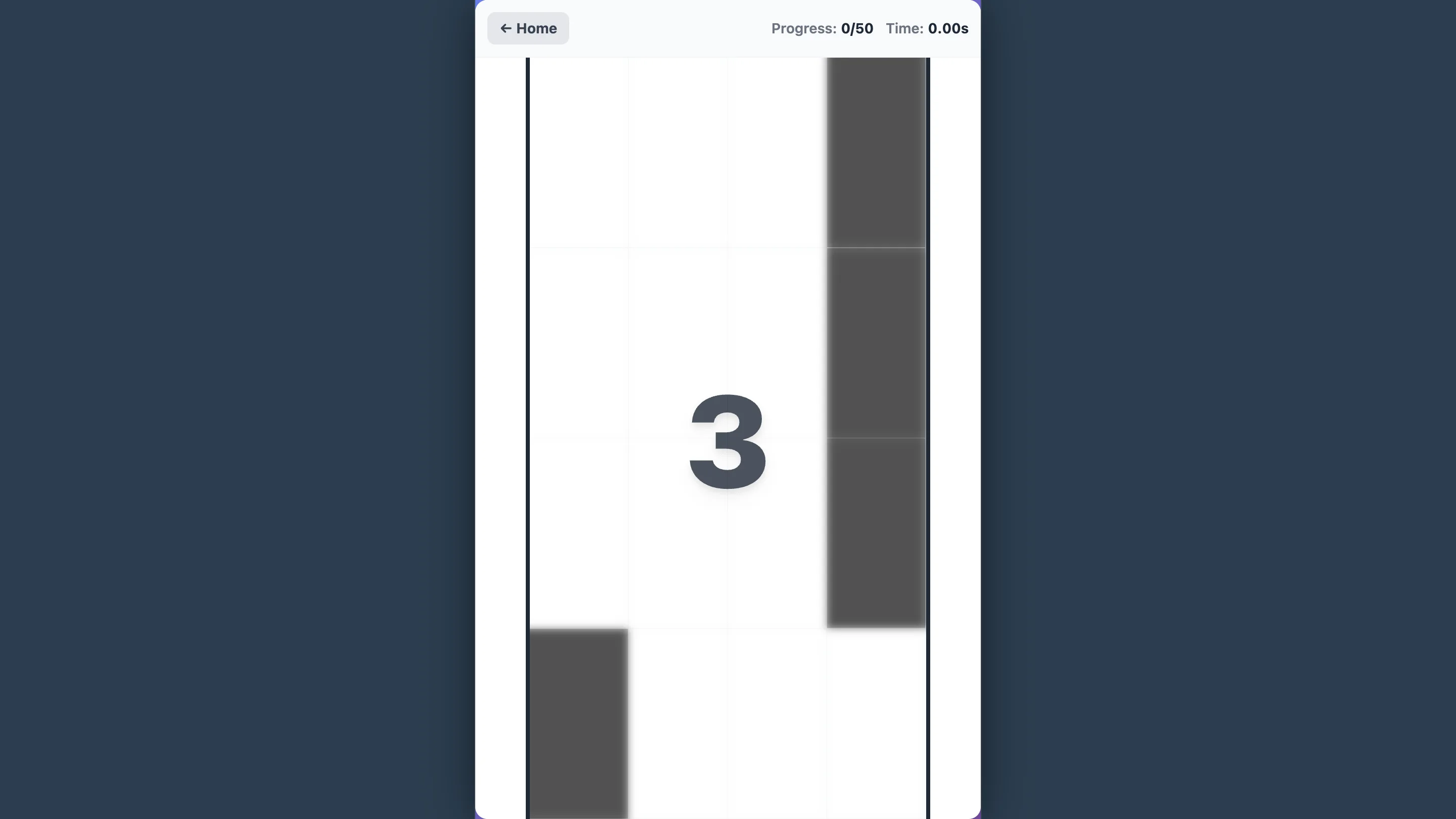
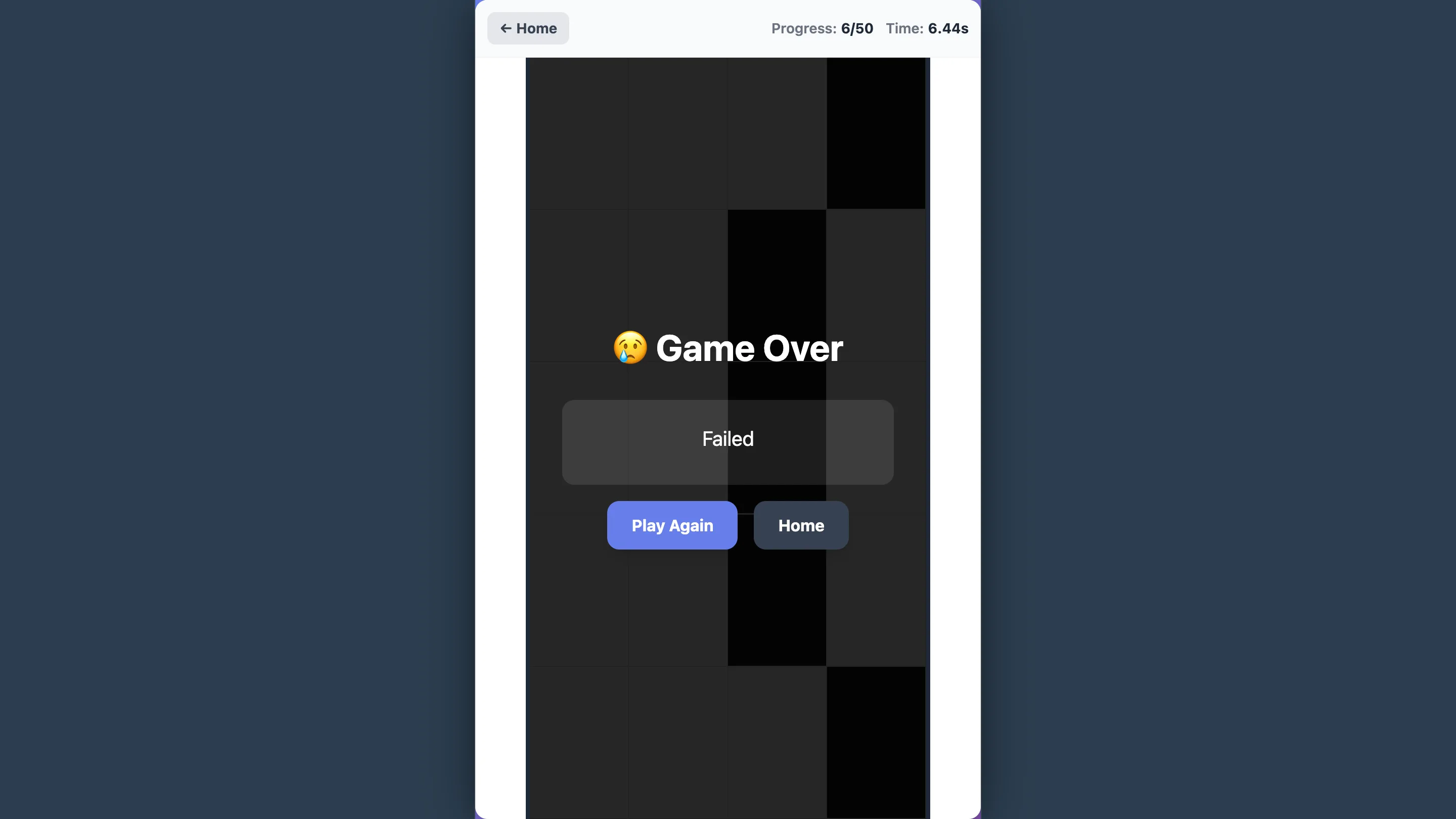
After one clean tap, the board still looked calm. At 5 of 50, the pace already felt more serious. By 6 of 50 and 6.44 seconds, the penalty for drifting attention was immediate. That is why short browser runs are so useful for learning the game. They compress the lesson.
The mistake I would warn every first-time player about
Do not stare at the tile that is still far away. New players often panic because they want to read the whole board at once. The better move is narrower: read the next landing tile, then the next one, then the next.
A simple seven-day starter plan
- Day 1-2: short classic runs, score ignored
- Day 3-4: two-finger rhythm, eyes low
- Day 5-6: repeat the same board and track the first miss
- Day 7: compare the board feel, not just the count
Editor’s Note — first browser check
My first useful run on the classic board was not a high score. It was a short sequence that taught me how quickly the game punishes wandering eyes. I started with a single-tap screen, then reached 5/50 in about 1.08 seconds, and finally failed at 6/50 after 6.44 seconds. Those numbers are small, but they were enough to show exactly when my eyes drifted away from the landing zone.
The other thing I noticed is that the current on-site route is better as an entry point than as a teaching environment. The site page helped me find the game, but the clean classic board gave me clearer feedback, faster restarts, and a more obvious sense of how progress changes from one run to the next. That difference matters for beginners because fast restarts make it much easier to connect a miss with the exact reading mistake that caused it.
So if you are using this guide to figure out how to play Piano Tiles, start with the simplest possible board logic: black tiles, low eyes, quiet hands, short sessions. Once that feels natural, the score begins to rise on its own. That shift from panic to pattern was the first real sign of improvement in my own browser runs.