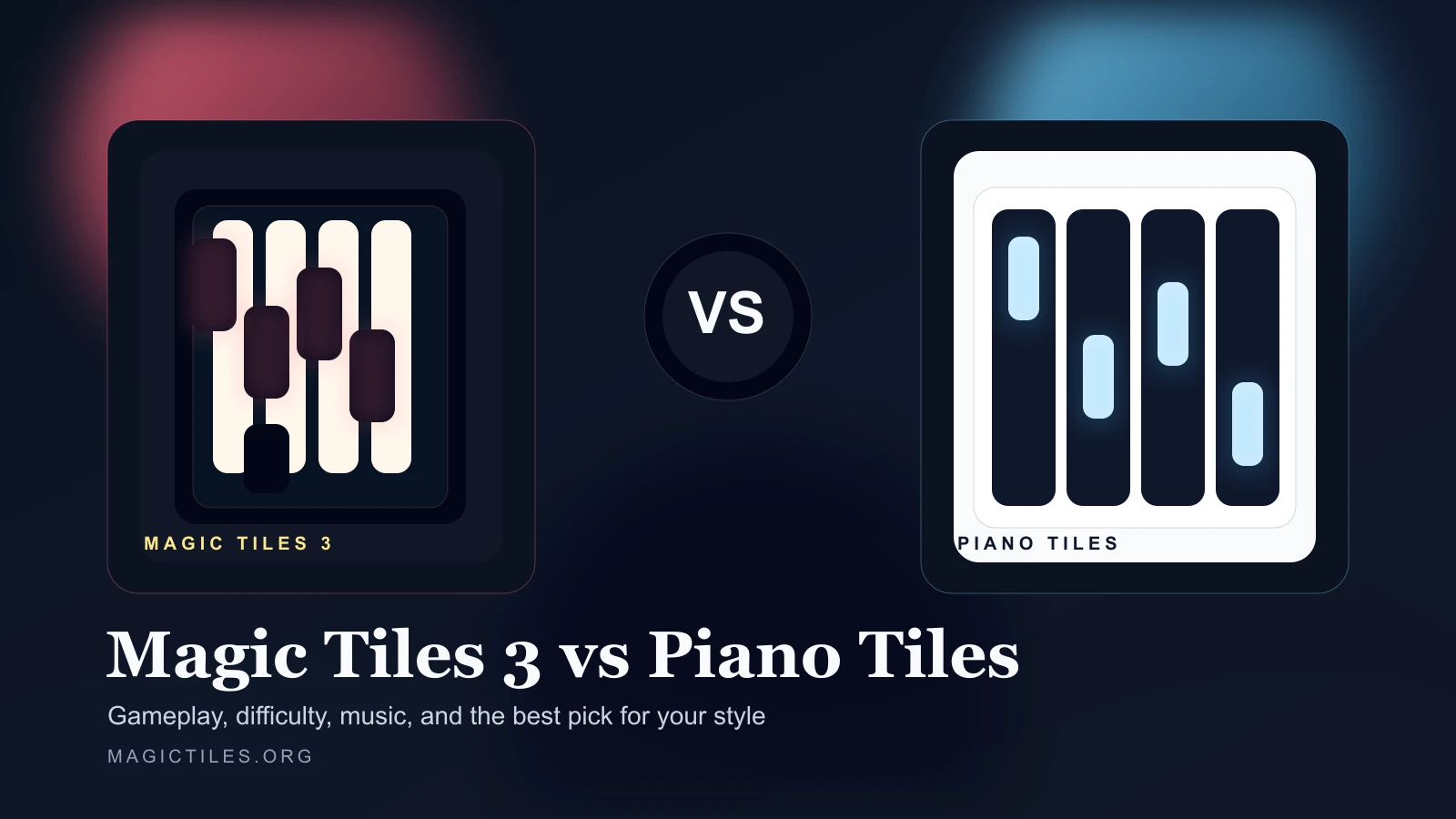
I approached Magic Tiles 3 vs Piano Tiles as a player problem, not a keyword problem. On January 18, 2026, I checked the current browser flows on a desktop Chrome setup, opened the current Magic Tiles route on the site, then switched to a clean classic black-tile board so I could compare friction, lane reading, and how quickly a mistake turns into a restart.
The first surprise was not difficulty. It was setup. The Magic Tiles side asked for more patience before I even reached a song list, while the classic board got me to an active lane almost immediately. That difference matters more than many comparison posts admit, because the first minute often decides whether a beginner keeps playing or closes the tab.
Magic Tiles 3 vs Piano Tiles: the short answer
- Pick Magic Tiles 3 if you want a louder presentation, more song framing, and a session that feels closer to a mobile live-service game.
- Pick the classic board if you want instant starts, cleaner lanes, and a stricter reaction test.
- Start with the classic side if you are learning timing from zero and want fast feedback after every miss.
What changed my view after testing both is that the choice is less about "better game" and more about how much friction you tolerate before the rhythm loop feels good.
What I noticed in the first minute
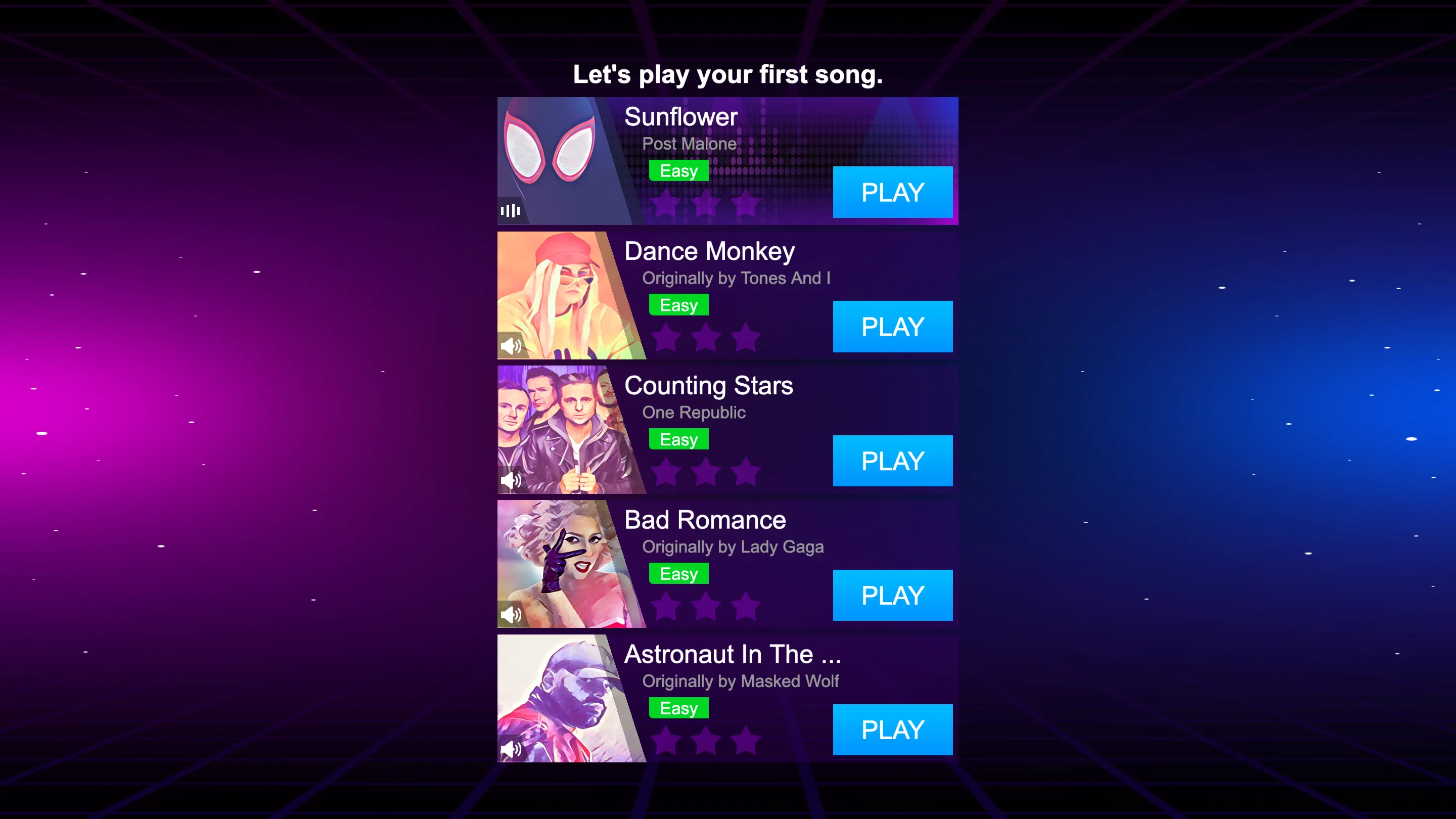
On the Magic Tiles side, the browser flow felt bigger and slower. I had to move through an external handoff, then wait for a branded loading sequence and song picker. Once I reached the list, the presentation looked polished and familiar, but it clearly asked for more patience up front.
The classic board was the opposite. It opened straight into four lanes with no extra spectacle. I was tapping in seconds, and when I missed, the board reset immediately. That made the feedback cleaner, especially for short practice bursts.
Where the pressure feels different
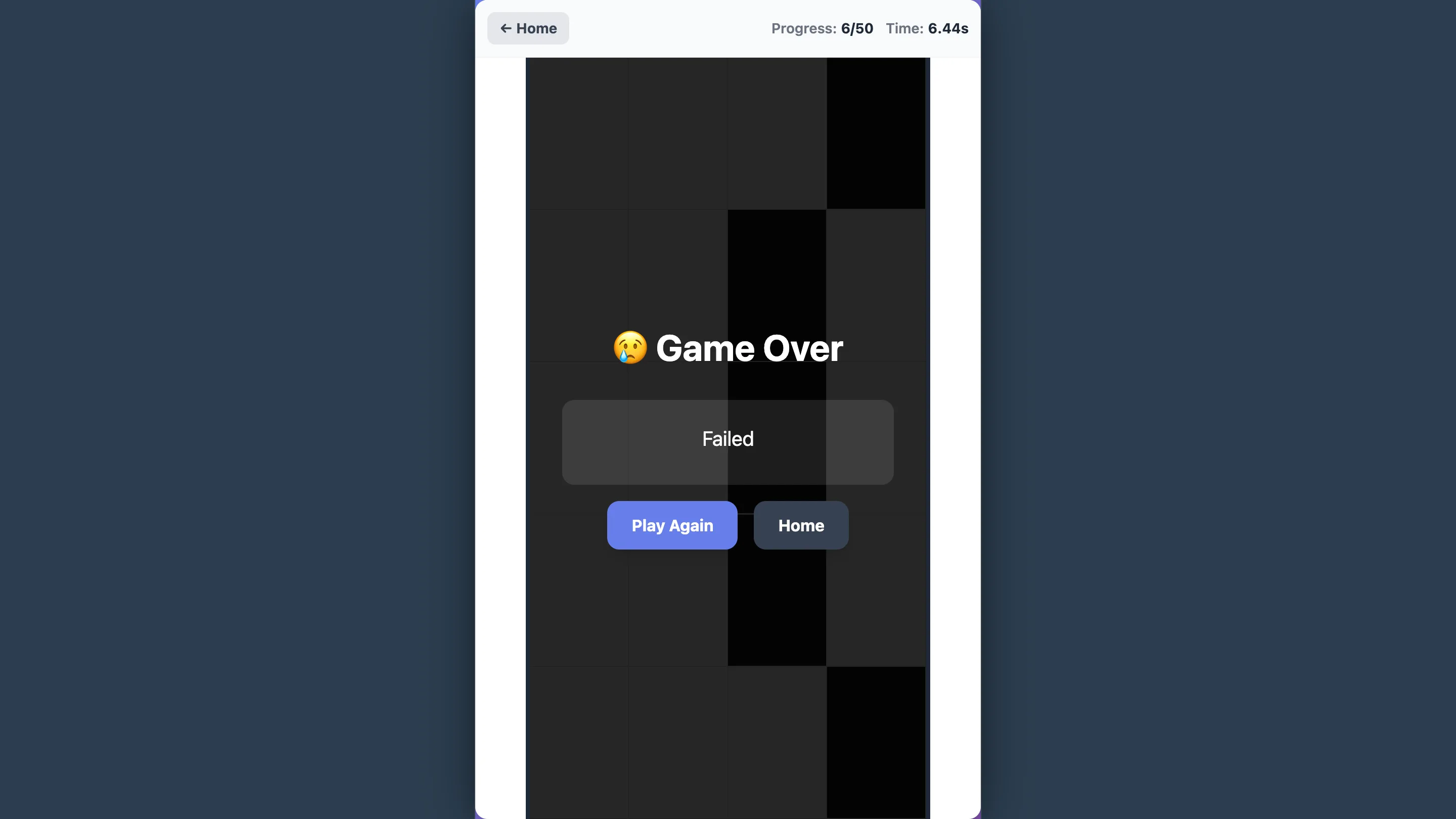
The classic board punishes hesitation right away. In my cleanest short run, I reached 6 of 50 tiles before a miss ended the attempt at 6.44 seconds. That is the appeal: one wrong touch, instant result, try again.
Magic Tiles 3 spreads the pressure across a longer arc. Song choice, presentation, and onboarding change the mood before the lane reading even begins. That gives the session more personality, but it also makes the game feel less surgical when your only goal is timing reps.
Best fit for beginners, commuters, and repeat grinders
For absolute beginners, I would still hand the classic board to someone first. The rule set is easier to read, the restart is faster, and the board teaches the black-tile habit with less noise.
I would hand Magic Tiles 3 to the player who needs a song list, bigger presentation, and a stronger sense of reward between attempts. If you get bored by minimalist drills, that extra layer keeps you engaged longer.
Device feel and session length
On mobile, both styles make sense, but they reward different moods. The classic board suits a one-minute reflex check. Magic Tiles 3 fits a longer session, especially when you actually want to browse songs instead of immediately re-running the same lane pattern.
On desktop, the difference felt even sharper. The classic board looked almost like a reaction test. Magic Tiles 3 felt more like opening a music app that happens to demand rhythm accuracy.
Editor’s Note — Tested on January 18, 2026
I ran both checks on January 18, 2026 in desktop Chrome with the current site route open in one tab and the classic board in another. The Magic Tiles side first stopped at a blocked shell, then pushed me through a handoff, then finally opened a five-song starter list with Sunflower, Dance Monkey, Counting Stars, Bad Romance, and Astronaut In The.... The classic board gave me a playable lane almost immediately, so my hands were already learning timing before the other route had finished its setup.
That difference changed my mood more than the note patterns did. On the classic board, my clearest short result was 6/50 in 6.44 seconds, and the instant replay button made it easy to study the miss while the pattern was still fresh in my hands. On the fuller song-list side, I enjoyed the presentation more, but I was also more willing to browse tracks, wait through the extra gate, and treat the session like entertainment instead of pure timing practice.
So my Magic Tiles 3 vs Piano Tiles answer is simple: use the classic board when you want raw reaction reps, and use the fuller song-based route when you want atmosphere and a longer session. The better choice depends less on genre loyalty and more on how much launch friction you are willing to tolerate.