The phrase "beginner to pro" sounds dramatic, but the gap is usually built from habits that look small on screen. When I reviewed the current browser routes and short board tests on December 28, 2025, the same truth kept showing up: stable players do fewer things, not more. They look lower, move less, and stop earlier than frustrated players do.
That is the real bridge in Magic Tiles Beginner to Pro. It is not a secret chart. It is a calmer routine.

Magic Tiles Beginner to Pro: 10 rhythm habits that hold up
- Start with one easy opener every session.
- Keep your eyes near the landing zone.
- Use smaller finger motion than feels natural.
- Stop checking score in the middle of a clean run.
- Learn one board before switching to five.
- Use the same device long enough to trust it.
- Reset after one miss instead of forcing speed.
- Review the fail point before restarting.
- End while the timing still feels sharp.
- Keep one short benchmark for honest comparison.
Which habits mattered most in my browser checks
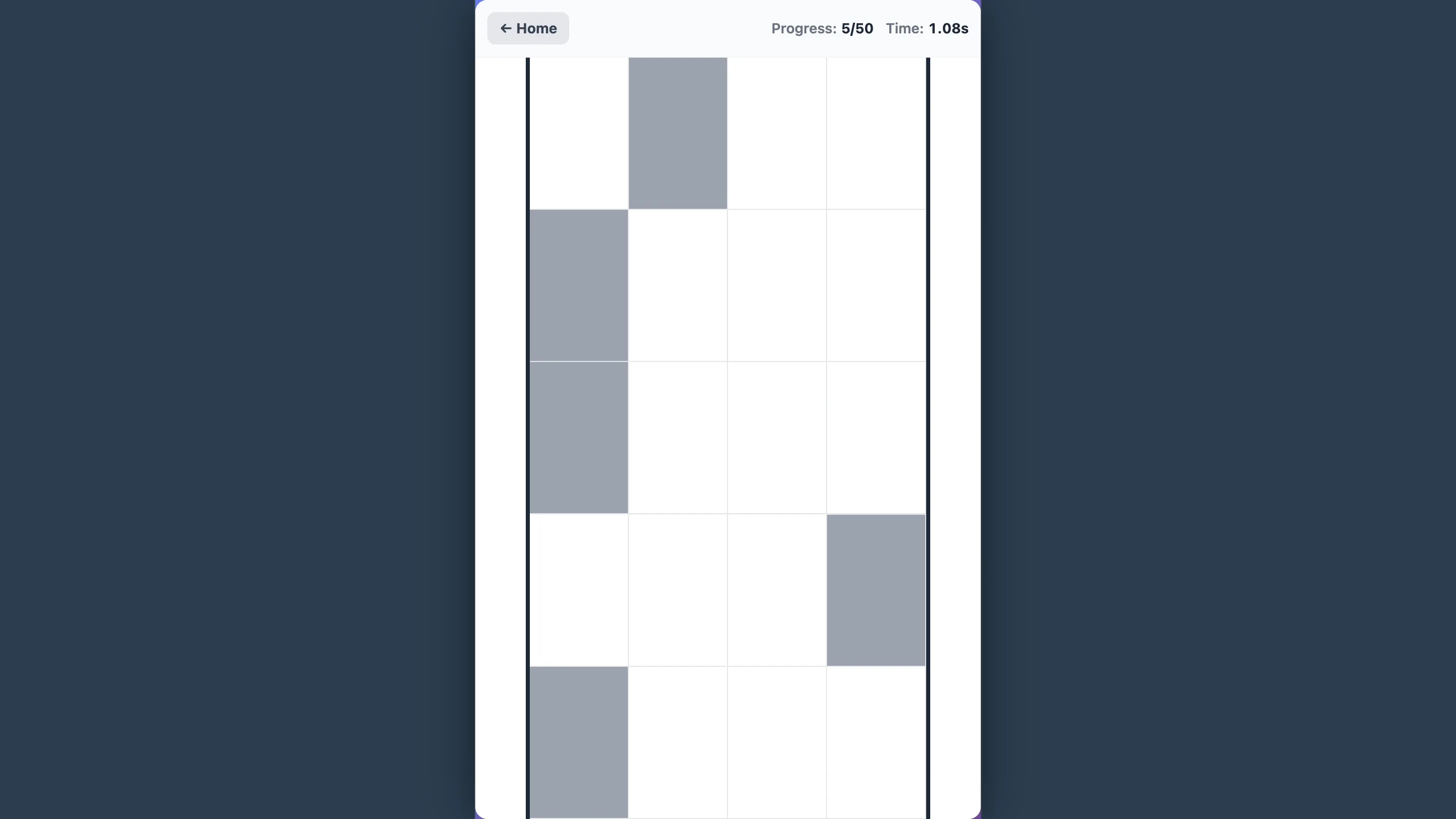
The two most useful changes were eye line and session length. Once I stopped staring high and stopped playing after the board felt messy, the rhythm loop immediately looked more manageable.
A one-week habit reset
Day 1-2
- play one calm opener
- write the first fail point
Day 3-4
- focus only on lower eye position
- keep the same board or song
Day 5-6
- shorten finger travel
- stop the session as soon as taps turn heavy
Day 7
- replay the same baseline content
- compare how the run feels, not only the number
What separates new players from stable players
Stable players turn the board into a repeatable environment. New players keep changing the environment and then wonder why the result keeps changing too.
My Take — the habit that mattered most
If I had to keep only one habit, I would keep the low eye line. It changed everything fastest. During my short board checks, the difference between a messy run and a readable run was usually just where my eyes settled after the first tap. The moment I stopped staring at the top spawn area, the board stopped feeling like a blur and started feeling like a sequence I could actually follow.
The second habit was ending on time. Once the hands got tense, every later run gave me worse information. The mobile route made that especially obvious because thumb tension arrived sooner than it did on desktop. Good players are not only better at tapping. They are better at noticing when the session is no longer teaching them anything useful.
That is the whole Magic Tiles Beginner to Pro story in plain terms: cleaner habits, clearer misses, calmer repeats. The jump does not come from a miracle trick. It comes from stacking a few boring habits until the board finally looks stable. In my checks, the visible progress always came from repeating the same easy opener until it felt calm, not from constantly escalating difficulty. That slower approach made the hard sections feel less random and much more readable.