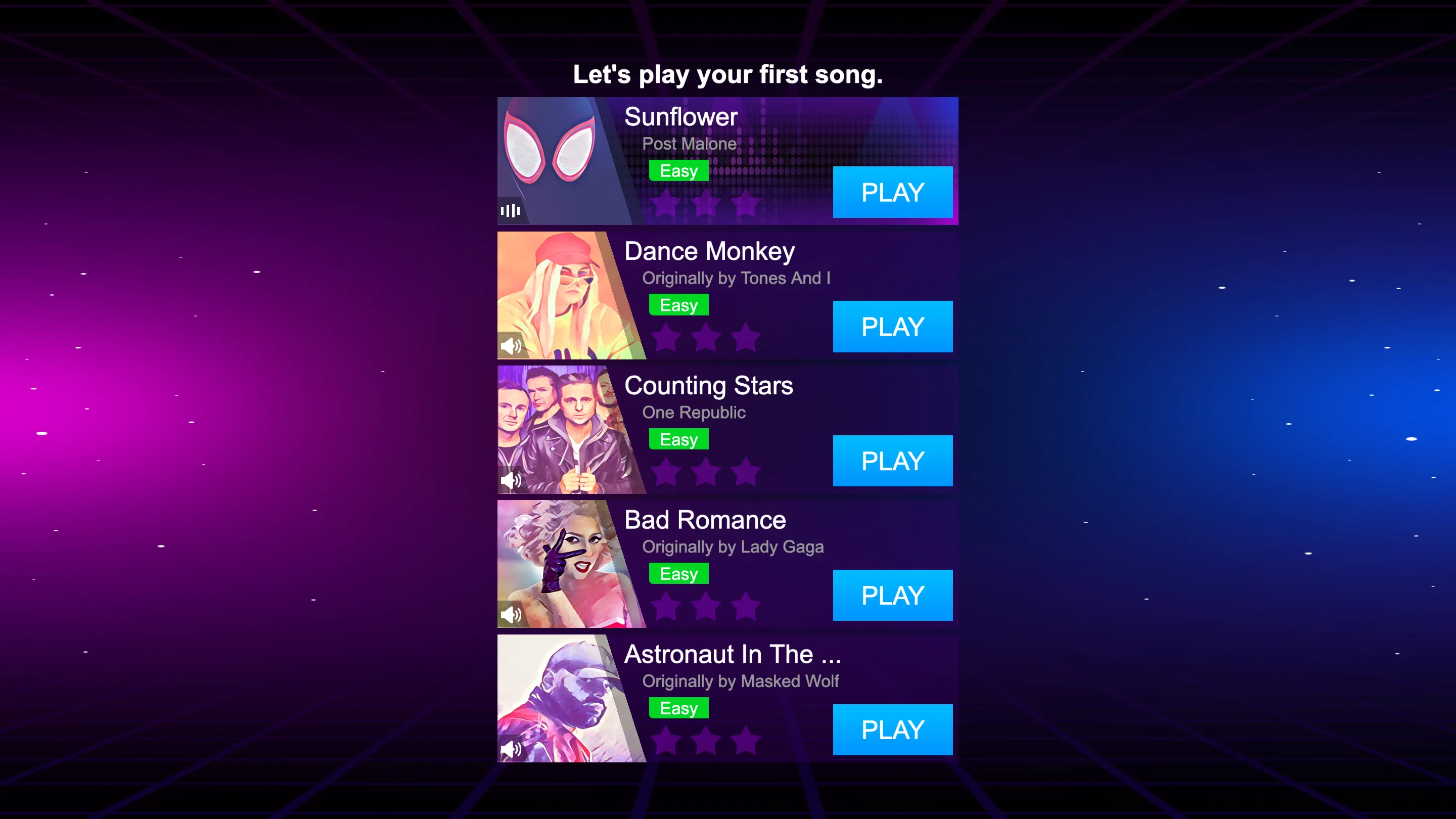
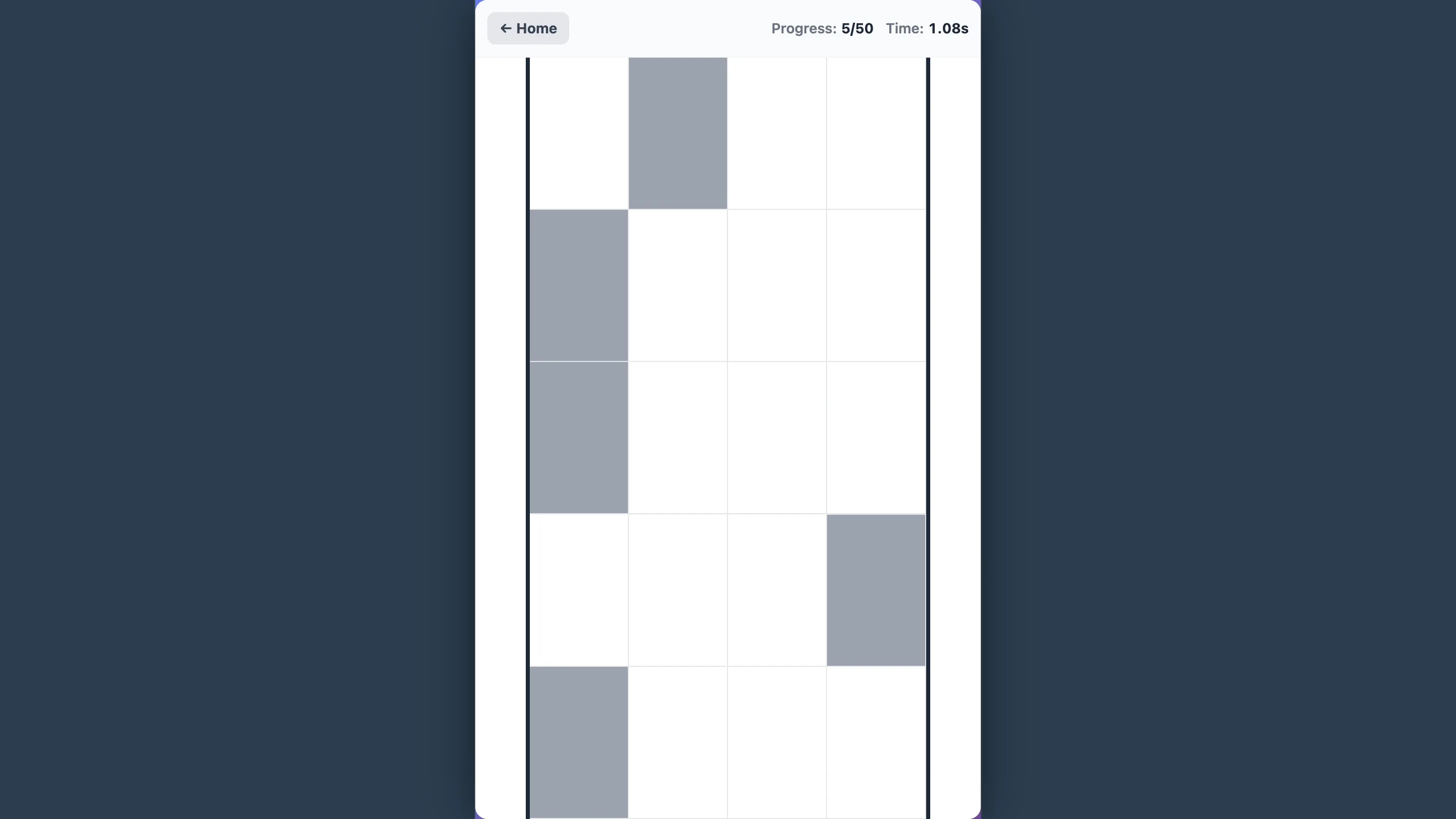
The best version of a magic tiles practice plan is boring in the right way. It repeats a few clean actions until your misses become predictable instead of random. When I rebuilt this guide, I based it on the browser checks I ran on November 21, 2025: one direct Magic Tiles song list for structure and one classic black-tile board for quick benchmark loops.
That mix taught me something useful. The richer song menu is good for motivation, but the shorter classic board is better for measuring whether a habit is actually improving. A solid plan needs both motivation and measurement.
Magic tiles practice plan: the baseline comes first
Before Day 1, write down four things:
- your easiest repeatable board or song
- your current fail pattern
- your usual session length before frustration
- the device you will actually use most often
Without that baseline, the plan turns into mood tracking instead of skill tracking.
A 30-day structure that holds up
Week 1: clean timing
- short warm-up
- one repeat board or song
- stop after the first obvious tension spike
Week 2: add speed carefully
- keep the same warm-up
- add one faster section or track
- review only one mistake pattern per day
Week 3: combo recovery
- continue the same opener
- practice how you settle after one miss
- protect form instead of forcing a personal best
Week 4: test week
- replay the original baseline content
- compare fail points and pacing
- keep one lighter day before the final check
What to measure so the plan stays honest
- first fail point
- how the miss happened
- whether the hand stayed relaxed
- whether you stopped on time
The last point matters. A practice system breaks down when "just one more run" turns a focused session into a tired grind.
The version I would actually follow now
I would keep the daily session at 15 to 20 minutes, use one easy opener, one main drill, and one written note. Anything longer belongs to a fun session, not a training session.
Busy-day fallback
If you only have five minutes:
- one quick warm-up
- one repeat section
- one note about the miss
That is enough to keep the habit alive without pretending you did a full training block.
Editor’s Note — what changed after testing
The practical shift for me was separating practice content from mood content. I used the richer Magic Tiles song list to keep the session interesting, then used the short classic board as my benchmark because it gave me clean numbers fast. My baseline miss still came at 6/50 after 6.44 seconds, but once I recorded that in the same note every day, the next session had a real reference point instead of a vague memory.
I also stopped believing in marathon improvement days. The sessions that felt most useful lasted 15 to 20 minutes, and each one had a single question attached to it: did I miss because my eyes drifted high, because my finger travel got too large, or because I kept going after tension showed up? That made the notes brutally simple, which is exactly why they were useful on the following day.
That is why my magic tiles practice plan now looks almost boring on paper: same opener, one target habit, one written note, done. The repetition is the point. A real training system should reduce noise, not create more of it. I also found that skipping the written note made the next session noticeably worse because I kept repeating the same avoidable miss without realizing it.